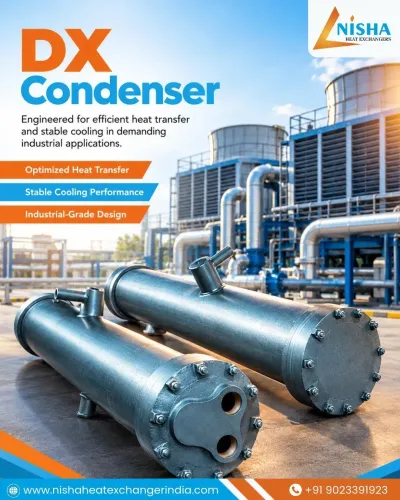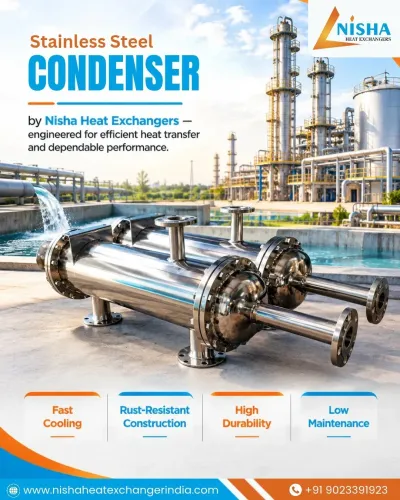
Maintaining the right temperature is essential for smooth industrial operations, especially where heat generation can affect product quality, machinery life, or process stability. A Shell & Tube Type Chiller provides a practical method of transferring heat from process fluids and maintaining controlled cooling conditions. Nisha Heat Exchangers is a Shell & Tube Type Chiller Manufacturer in Ahmedabad, offering engineered cooling equipment for different industrial and process requirements.
What Is a Shell & Tube Type Chiller?
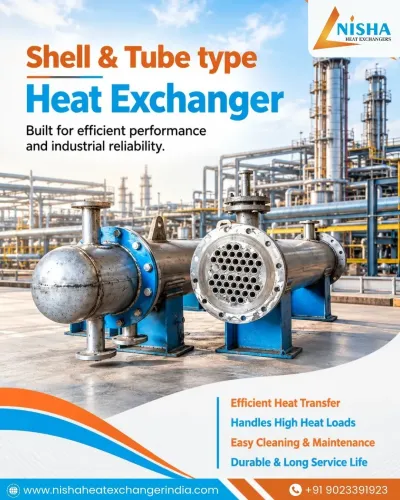
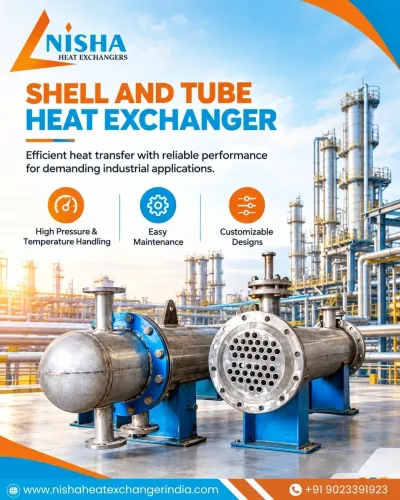
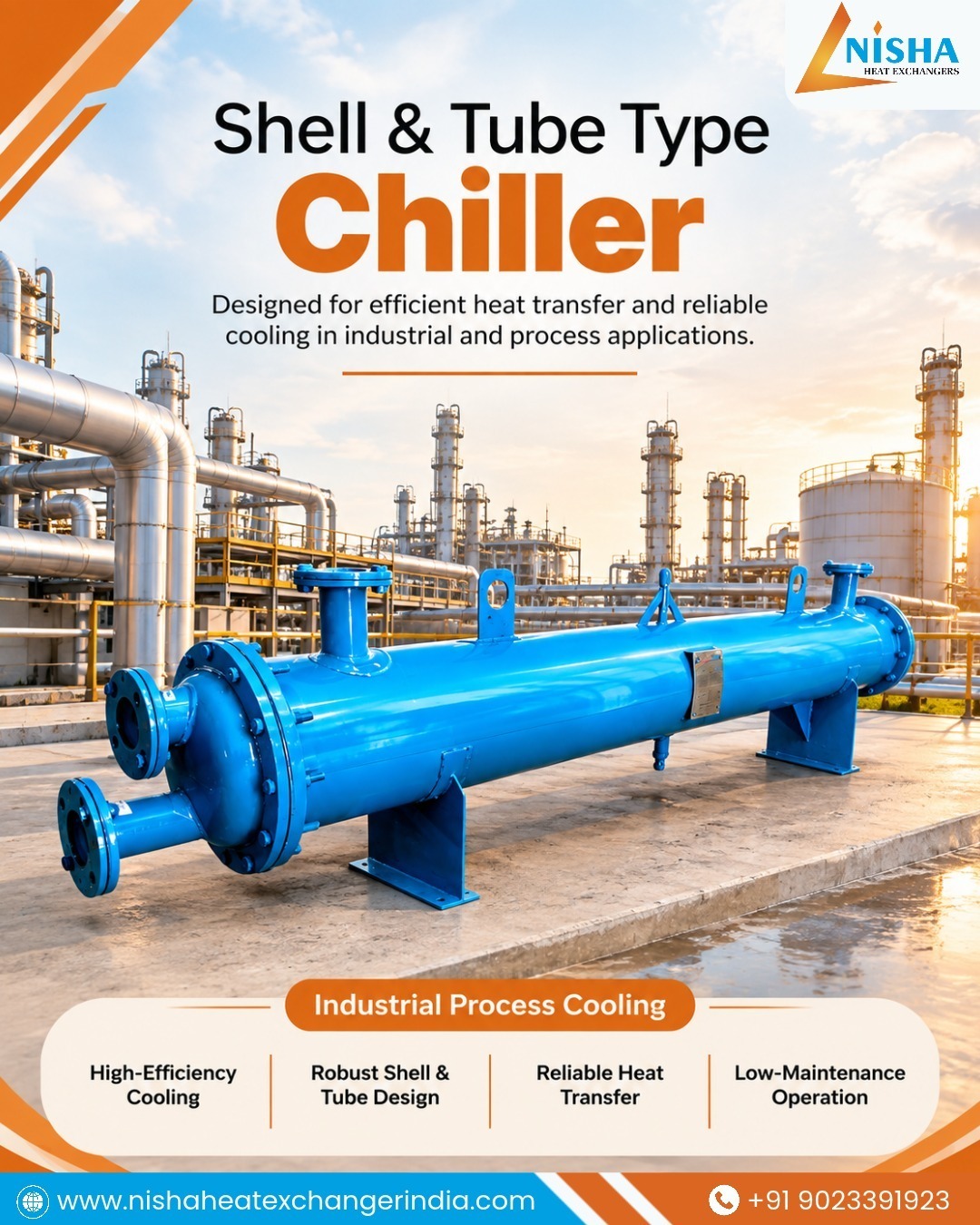
A Shell & Tube Type Chiller is a heat-transfer system made up of a pressure-resistant shell and multiple tubes arranged inside it. Typically, one fluid passes through the tubes while another flows through the shell side. Heat moves through the tube walls, allowing the required cooling process to take place without the two fluids coming into direct contact.
Main Components
- Cylindrical Shell: Provides the main housing for the heat-transfer assembly.
· Tube Bundle: A precisely arranged set of tubes designed to facilitate efficient fluid flow and heat exchange.
· Tube Sheets: Support and hold the tubes securely while keeping the fluid circuits properly separated.
- Baffles: Control shell-side flow and improve heat-transfer performance.
- Headers or Water Boxes: Distribute fluid into and out of the tube passages.
- Nozzles and Connections: Provide suitable entry and exit points for process fluids.
- Tube Materials: Selected according to fluid properties, temperature, pressure, and corrosion requirements.
Advantages of Shell & Tube Type Chillers
Choosing a properly engineered Shell & Tube Type Chiller can provide several benefits for industrial cooling systems:
- Efficient transfer of heat between two fluids
- Strong construction for industrial environments
- Suitable for continuous-duty applications
- Flexible design for different cooling requirements
- Options for single-pass and multi-pass operation
- Convenient access for inspection and servicing
- Tube bundles can be cleaned when necessary
- Adaptable to different flow rates and temperature conditions
- Suitable for a wide range of industrial processes
- Can be designed for varying pressure and thermal loads
Applications of Shell & Tube Type Chillers
Shell and tube cooling equipment can be used across industries where process fluids need controlled temperature reduction. Common applications include:
- Industrial process cooling
- Chemical processing plants
- Pharmaceutical production
- Food and beverage industries
- Plastic processing facilities
- Manufacturing units
- HVAC and central cooling systems
- Machinery and equipment cooling
- Process water temperature control
- Industrial and commercial plants
Nisha Heat Exchangers operates as a Shell & Tube Type Chiller Supplier in Gujarat, helping customers identify suitable equipment based on the type of fluid, cooling load, temperature requirements, flow conditions, and operating environment.
Looking for a dependable industrial cooling solution? Contact Nisha Heat Exchangers for a Shell & Tube Type Chiller designed around your application requirements.
Frequently Asked Questions
1. What is a Shell & Tube Type Chiller used for?
A Shell & Tube Type Chiller is used to remove heat from process fluids and maintain the required operating temperature. It is commonly used in manufacturing, chemical, pharmaceutical, HVAC, food processing, and other industrial applications.
2. What makes shell and tube chillers suitable for industrial use?
Their robust construction, flexible flow arrangements, serviceability, and effective heat-transfer capability make them suitable for many demanding industrial environments. A Shell & Tube Type Chiller Supplier in Gujarat can recommend a suitable design based on the application.
3. What factors should be considered when selecting a chiller?
Important factors include required cooling capacity, fluid type, flow rate, inlet and outlet temperatures, operating pressure, material compatibility, heat-transfer requirements, and the intended working environment.
Keywords